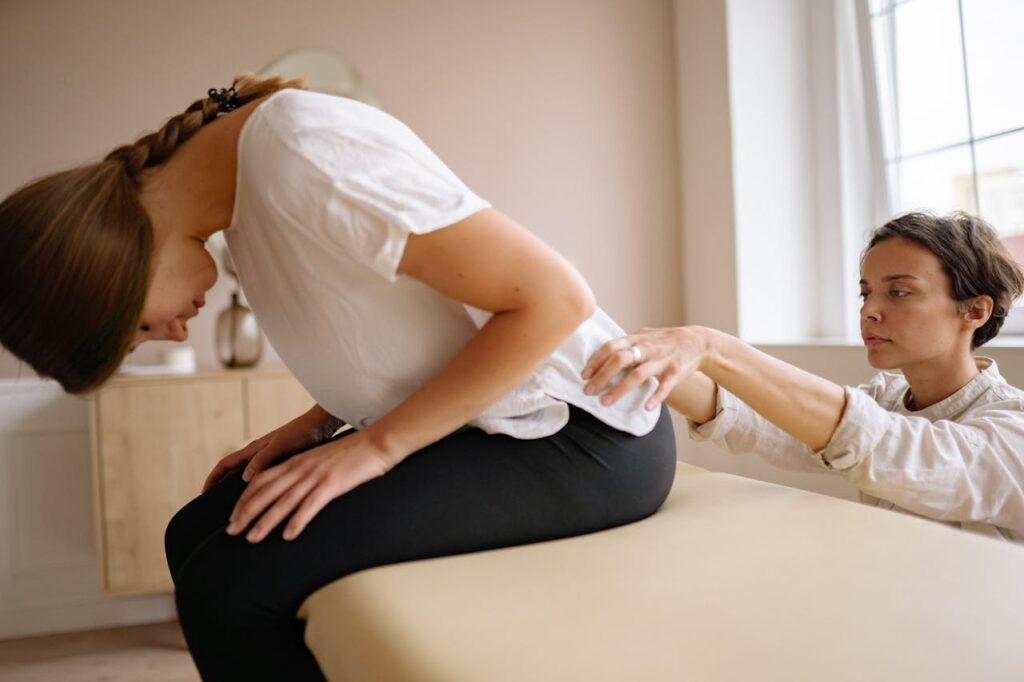
Many people assume back pain starts in the back. However, in many cases, the problem begins much lower in the body—often at the feet. When standing on hard surfaces for extended periods, the body is forced to absorb repeated micro-stress without adequate cushioning. Over time, this can overload the muscles and joints that support the spine.
The human body is designed as a kinetic chain, meaning each segment—from the feet to the spine—affects the others. When one link is under stress, the rest must compensate. Hard surfaces disrupt this balance by increasing ground reaction forces and reducing natural shock absorption.
For individuals who work retail, healthcare, manufacturing, or service jobs requiring prolonged standing, this issue is especially common and can contribute to chronic lower back discomfort or even long-term spinal strain.
Key Takeaways
- Hard surfaces do not absorb shock, increasing stress on the spine
- Prolonged standing leads to muscle fatigue in the feet, legs, and lower back
- Poor posture and foot mechanics worsen spinal alignment over time
- The body compensates for discomfort, often creating additional strain
- Footwear and surface conditions play a major role in back pain prevention
- Core and postural muscles fatigue faster on hard flooring
- Small daily stresses can accumulate into chronic pain conditions
Understanding Why Hard Surfaces Trigger Back Pain
The Role Of Ground Reaction Forces
Every time you stand, walk, or shift weight, the ground pushes back with equal force. This is known as the ground reaction force. On soft or cushioned surfaces, some of this force is absorbed. On hard surfaces, nearly all of it is returned directly into the body.
This repeated force travels upward through the:
- Feet
- Ankles
- Knees
- Hips
- Spine
When shock absorption is insufficient, the lower back often becomes the final point of stress accumulation.
The Spine’s Job In Standing Posture
The spine, particularly the Chronic Low Back Pain region, is responsible for stabilizing the upper body while maintaining upright posture. When standing on hard surfaces, spinal muscles must work continuously to maintain balance.
Unlike walking, where movement redistributes pressure, standing keeps the same muscle groups engaged for long periods. This static load leads to fatigue, stiffness, and eventually pain.
How The Body Responds To Hard Surface Standing
Muscle Fatigue And Overcompensation
When you stand still on a hard surface, the postural muscles—especially in the lower back and hips—remain engaged without rest. Over time, these muscles begin to fatigue.
Once fatigue sets in, the body compensates by:
- Shifting weight to one side
- Tilting the pelvis
- Locking the knees
- Leaning forward or backward
These compensations reduce efficiency but increase strain on the spine.
The Chain Reaction Through The Kinetic System
Because the body functions as a connected system, stress rarely stays localized. If the feet cannot absorb pressure effectively, the ankles and knees begin to adjust. This misalignment continues upward, eventually affecting spinal curvature.
Even small imbalances at the foot level can create:
- Uneven hip alignment
- Increased lumbar pressure
- Tight hamstrings or hip flexors
- Reduced core stability
The Role Of Foot Mechanics In Back Pain
How Foot Structure Affects Spinal Alignment
Foot structure plays a major role in how forces are distributed. For example:
- Flat feet can cause overpronation (inward rolling)
- High arches can reduce shock absorption
- Uneven weight distribution affects gait and posture
These imbalances travel upward and place uneven stress on the spine.
When standing on hard surfaces, these issues become more pronounced because the body has no cushioning to offset misalignment.
Lack Of Arch Support And Shock Absorption
The arches of the feet are natural shock absorbers. When they collapse or fail to function properly, the body loses a key buffering system.
Without proper support:
- Impact forces increase in the lower back
- Muscles work harder to stabilize posture
- Fatigue occurs faster
- Pain develops more easily over time
Posture And Standing Habits That Increase Back Pain
Static Posture Vs Dynamic Movement
Standing still for long periods is more stressful than walking. Movement helps redistribute pressure, while static posture keeps the same muscles engaged continuously.
Workers who stand in one position often experience more discomfort because:
- Blood flow decreases in the lower limbs
- Muscles remain in constant contraction
- Spinal discs experience sustained compression
Common Postural Mistakes
Several habits worsen back pain on hard surfaces:
- Locking knees while standing
- Leaning heavily on one leg
- Forward head posture
- Slouched shoulders
- Poor workstation height
Each of these increases uneven spinal loading.
Why Hard Floors Make Fatigue Worse
Reduced Shock Absorption
Soft surfaces like rubber mats or carpet reduce impact forces. Hard surfaces do the opposite—they reflect energy into the body.
This leads to:
- Increased joint stress
- Faster muscle fatigue
- Greater spinal compression
Continuous Micro-Stress Accumulation
Even though each step or shift in weight may seem minor, repeated exposure over hours can lead to cumulative strain. This is especially true for jobs that require 6–10 hours of standing daily.
Footwear And Its Impact On Back Pain
Why Shoes Matter More On Hard Surfaces
Footwear acts as the first line of defense against ground impact. Poor footwear increases stress on the spine by failing to absorb shock.
Unsupportive shoes often lead to:
- Reduced arch support
- Increased heel pressure
- Poor alignment of the lower limbs
The Importance Of Cushioning And Support
Proper footwear helps:
- Absorb ground reaction forces
- Stabilize foot alignment
- Reduce spinal load
- Improve posture over time
Without it, the spine must compensate for every step and shift in weight.
Long-Term Effects Of Standing On Hard Surfaces
Development Of Chronic Pain Conditions And Musculoskeletal Strain
When the body is exposed to prolonged standing on hard surfaces day after day, the stress is not just temporary fatigue—it gradually reshapes how muscles, joints, and the spine function. Over time, this repetitive loading can contribute to long-lasting discomfort and structural imbalance throughout the musculoskeletal system.
One of the most common outcomes is the development of persistent lower back discomfort, often associated with ongoing strain in the supporting muscles of the lumbar region. When these muscles are repeatedly forced to stabilize the body without adequate recovery time, they begin to lose efficiency. This can lead to a cycle of tightness, weakness, and overcompensation, where certain muscle groups work harder while others become underactive. As this imbalance progresses, everyday movements such as bending, lifting, or even simple standing can feel increasingly uncomfortable.
In addition to muscular strain, long hours on unforgiving flooring can also contribute to joint stiffness, particularly in the ankles, knees, hips, and lower spine. Because hard surfaces do not absorb shock, every shift in body weight sends direct force upward through the skeletal structure. Over time, this repeated impact reduces joint flexibility and may limit the natural range of motion. Many individuals begin to notice that their body feels “tight” after long work shifts, especially after remaining in one position for extended periods without movement.
Another significant concern is reduced mobility. As discomfort becomes more frequent, people often unconsciously adjust their posture or walking patterns to avoid pain. While these compensations may provide short-term relief, they can gradually restrict normal movement patterns. This can affect balance, gait efficiency, and overall physical performance, making everyday activities feel more demanding than before.
Spinal Compression And Disc Stress Over Time
Beyond muscle and joint changes, the spine itself is highly affected by continuous exposure to hard standing surfaces. The lumbar region, which supports much of the body’s upper weight, experiences sustained compressive forces throughout the day. Unlike dynamic movement, which allows pressure to shift and redistribute, static standing keeps the same spinal structures under constant load.
Over extended periods, this ongoing compression can place stress on the intervertebral discs—the soft, gel-like cushions between the vertebrae. These discs rely on movement and variation in pressure to maintain hydration and flexibility. When compression becomes repetitive and prolonged, disc function may become less efficient, leading to a feeling of stiffness or reduced spinal elasticity.
This does not happen overnight; rather, it develops gradually through cumulative exposure. Individuals may first notice mild tightness or fatigue in the lower back after standing for long durations. Over time, these sensations may become more frequent and may persist even after rest periods.
Ultimately, the combination of muscular fatigue, joint restriction, and spinal loading creates a layered effect that impacts overall comfort and mobility. Addressing these stressors early—through supportive footwear, surface cushioning, and posture awareness—can significantly reduce the risk of long-term musculoskeletal complications.
Who Is Most At Risk Of Pain From Standing On Hard Surfaces?
Occupations With Extended Standing Demands
Certain professions place individuals in situations where standing for long periods is not occasional but a core part of daily work. When this occurs on rigid flooring such as concrete, tile, or similar materials, the cumulative physical load on the body becomes significantly higher. Over time, this repeated exposure can increase the likelihood of musculoskeletal discomfort, especially in the lower back, legs, and feet.
Workers in retail environments are commonly affected. These roles often require continuous standing at cash registers, service counters, or during floor assistance duties. Even when movement is involved, it is usually limited to short distances, meaning the body still spends most of the shift in a vertical, weight-bearing position. Without sufficient opportunities to sit or relieve pressure, fatigue can build steadily throughout the day.
Healthcare professionals, including nurses and hospital staff, face similar challenges. Their work frequently involves long hours on their feet, often combined with physically demanding tasks such as patient handling, quick directional changes, and sustained attention in high-pressure environments. The combination of constant movement and prolonged standing can intensify strain on the lower limbs and spinal structures, especially when rest breaks are unpredictable or minimal.
Factory and warehouse employees are also highly vulnerable due to the nature of industrial environments. These settings typically involve hard, unforgiving flooring and repetitive tasks that require standing in fixed positions or performing repeated motions in a confined area. Over time, this can lead to muscle fatigue, joint pressure, and reduced postural stability, particularly in the lower back and hips.
Educators, such as teachers, often spend extended hours standing while instructing, supervising, or moving around classrooms. Although the activity level may appear moderate, the sustained upright posture without adequate sitting intervals can still place continuous demand on the musculoskeletal system. This is especially true in classrooms where the flooring is hard and ergonomic support is limited.
Restaurant and food service workers also experience prolonged standing during preparation, serving, and customer interaction. These roles often involve fast-paced environments where rest breaks are short or irregular. Combined with slippery or rigid flooring, the physical strain can increase significantly over the course of a shift.
How Work Environment And Recovery Time Influence Risk
Beyond job titles, the level of risk is heavily influenced by environmental conditions and recovery opportunities. Hard flooring materials do not provide natural shock absorption, meaning every shift in body weight creates direct impact through the lower extremities and spine. When this occurs repeatedly without adequate rest, the body has limited time to recover from micro-stress accumulated throughout the day.
Lack of movement variation also plays a major role. When individuals remain in static or near-static positions for extended periods, muscle groups responsible for postural support become overworked. At the same time, opposing muscles may become underused, contributing to imbalance over time.
Additionally, limited access to supportive surfaces, such as anti-fatigue mats or ergonomic footwear, can further increase strain. Without these protective elements, the body absorbs more force with each step and posture adjustment, gradually increasing the likelihood of discomfort.
In summary, individuals working in roles that require prolonged standing on hard surfaces—especially without frequent rest or supportive conditions—face a higher risk of developing ongoing musculoskeletal stress. Recognizing these risk factors early allows for better preventive strategies, including improved workplace ergonomics, posture awareness, and recovery habits.

Prevention Strategies For Back Pain
Use Anti-Fatigue Mats
Cushioned mats reduce ground reaction forces and help distribute pressure more evenly.
Wear Supportive Footwear
Shoes with proper arch support and cushioning reduce spinal load.
Improve Posture Awareness
- Keep knees slightly bent
- Distribute weight evenly
- Avoid leaning on one leg
Strengthen Core Muscles
A strong core helps stabilize the spine and reduces reliance on passive structures.
Take Micro-Breaks
Even short sitting or walking breaks can reset muscle fatigue.
The Connection Between Feet And Spine
How The Body Functions As An Integrated Support System
The human body operates through a highly interconnected structural network where each region influences the next. Rather than functioning in isolation, the feet, legs, pelvis, and spine work together to maintain balance, stability, and upright posture during everyday activities. When one part of this system experiences strain or reduced efficiency, the effects are often transferred upward through the kinetic chain.
The feet serve as the primary contact point with the ground, meaning they play a critical role in absorbing impact and distributing body weight. When this foundation is stable, forces generated during standing and movement are evenly dispersed. However, when stress is placed on the feet—especially during prolonged standing on rigid surfaces—the body’s ability to manage pressure becomes compromised.
In such situations, even subtle changes in foot positioning can influence alignment further up the body. Over time, these small adjustments may affect the ankles, knees, and hips, eventually reaching the spinal column. Because the spine is responsible for maintaining posture and supporting upper-body weight, it becomes highly sensitive to any disruption in lower-body mechanics.
How Imbalances In The Feet Influence Spinal Alignment
Foot mechanics play a significant role in determining how the rest of the body aligns. Variations such as uneven weight distribution, collapsed arches, or excessive outward rolling can gradually alter how forces travel upward. When standing on hard surfaces, these mechanical differences become more pronounced due to the lack of cushioning or shock absorption.
As the lower limbs attempt to compensate for instability, the pelvis may shift slightly out of its optimal position. This change, although often subtle at first, can influence the curvature of the lower back. The spine then adapts to maintain balance, which may lead to increased muscular effort and uneven loading across spinal structures.
Over time, this continuous adjustment process can place additional stress on postural muscles. These muscles are responsible for keeping the body upright, and when they are required to work harder for extended periods, fatigue develops more quickly. Once fatigue sets in, posture may begin to decline, further reinforcing the cycle of imbalance.
The Impact Of Fatigue And Daily Postural Stress
Fatigue is a key factor in how foot-related issues translate into spinal discomfort. When the muscles in the feet and lower legs become tired, their ability to stabilize the body decreases. This often leads to compensatory movements such as shifting weight to one side or leaning slightly forward or backward.
These adjustments may seem minor, but when repeated throughout long periods of standing, they can influence spinal loading patterns. Combined with poor posture habits, such as slouching or locking the knees, the cumulative effect places additional strain on the lumbar region.
Hard surfaces intensify this process by increasing ground reaction forces. Without adequate shock absorption, the body must continuously adapt to higher levels of impact. This repeated stress can gradually affect alignment efficiency and overall comfort.
In summary, the relationship between the feet and spine is deeply interdependent. When foot stability is compromised—especially during prolonged standing on unforgiving surfaces—the effects extend upward through the entire postural system. Over time, these small imbalances, combined with fatigue and repetitive strain, can significantly influence spinal alignment and overall musculoskeletal health.
Conclusion
Standing on hard surfaces may seem harmless at first, but over time, it can significantly contribute to back pain. The issue is not just the surface itself, but how the body responds to prolonged, unrelieved stress.
When standing, the body relies on the feet to absorb shock and distribute pressure. Hard surfaces eliminate much of this natural cushioning, forcing the muscles and joints to work harder than they are designed for over long periods. This creates a chain reaction that moves upward through the ankles, knees, hips, and ultimately the spine.
The lower back, particularly the Chronic Low Back Pain region, is especially vulnerable because it plays a central role in maintaining upright posture. When fatigue sets in, the muscles supporting the spine weaken, forcing the body to compensate through poor posture and uneven weight distribution. Over time, these compensations lead to strain, stiffness, and discomfort.
Foot mechanics also play a crucial role. Without proper arch support or cushioning, the body loses an essential shock-absorbing system. This increases pressure on spinal structures and accelerates fatigue. Combined with long hours of standing, this can contribute to persistent pain and reduced mobility.
Fortunately, many of these issues are preventable. Supportive footwear, anti-fatigue mats, improved posture habits, and core strengthening can significantly reduce strain. Even small changes—like shifting weight regularly or taking short movement breaks—can make a meaningful difference over time.
Understanding the connection between the ground beneath your feet and the alignment of your spine is key to preventing long-term discomfort. Back pain caused by hard surfaces is often not immediate but accumulates gradually. Addressing it early can help protect spinal health and improve overall comfort in daily activities.
FAQ
1. Why Does Standing On Hard Floors Hurt My Lower Back?
Hard floors increase impact forces that travel upward through your body, placing extra stress on your lower back muscles and spine.
2. Can Hard Surfaces Cause Chronic Back Pain?
Yes. Long-term exposure without proper support can contribute to persistent muscle strain and spinal discomfort.
3. Does Posture Affect Back Pain From Standing?
Absolutely. Poor posture increases uneven spinal loading and speeds up muscle fatigue.
4. Are Anti-Fatigue Mats Effective?
Yes. They reduce ground reaction forces and help distribute pressure more evenly across the body.
5. Can Footwear Really Make A Difference?
Supportive shoes with cushioning and arch support significantly reduce stress on the spine.
6. Why Does My Back Hurt More After Long Shifts?
Prolonged static standing causes muscle fatigue and spinal compression over time.
7. Is This Type Of Pain Permanent?
Not usually. With proper intervention—posture correction, footwear, and rest—symptoms often improve.
Find Real Relief From Chronic Knee Pain By Fixing Your Foot Alignment
Chronic knee pain has a way of creeping into everything. Walking, working, even just getting through the day can start to feel like a chore. What most people don’t realize is this: your knees might not be the real problem. When your feet are out of alignment, every step sends extra stress up into your knees, and over time, that adds up to pain that won’t go away.
At The Shoe Doctor, we take a different approach. Instead of chasing symptoms, we look at how your body moves from the ground up. Using advanced 3D foot-mapping technology, we pinpoint exactly where your alignment is breaking down, how your gait is affecting your knees, and where pressure is building with every step.
From there, we create custom orthotics designed specifically for your feet and your movement. The goal is simple: restore proper alignment, reduce strain on your knees, and help your body move the way it was meant to. When your foundation is right, everything above it starts to improve.
With over 20 years of experience, Russell has helped countless people get out of chronic pain and back to living normally again. Working alongside Spine and Injury Medical Center, we also look at posture and full-body mechanics so your results last, not just for now, but long term.
If knee pain has been limiting you, don’t settle for temporary fixes. Get to the source of the problem and finally feel the difference. Book your free consultation today and take the first step toward moving better, feeling stronger, and living without constant knee pain.
Disclaimer
The materials available on this website are for informational and entertainment purposes only and are not intended to provide medical advice. You should contact your doctor for advice concerning any particular issue or problem. You should not act or refrain from acting based on any content included in this site without seeking medical or other professional advice. The information presented on this website may not reflect the most current medical developments. No action should be taken in reliance on the information contained on this website, and we disclaim all liability for actions taken or not taken based on any or all of the contents of this site to the fullest extent permitted by law.