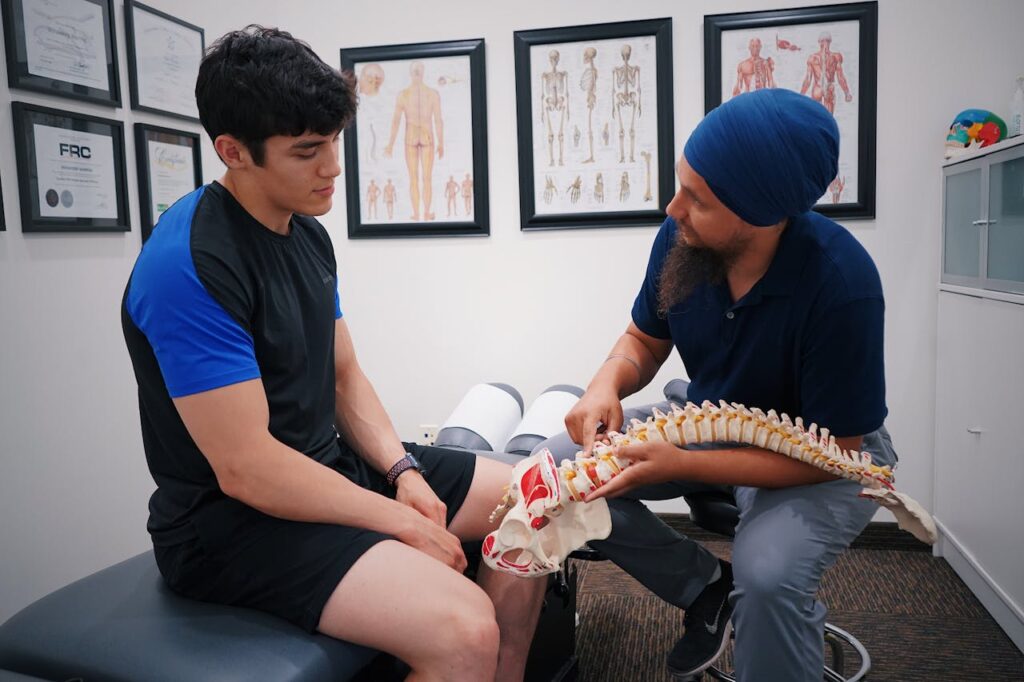
Sciatica is not a condition itself, but a symptom of an underlying issue affecting the sciatic nerve—the longest nerve in the human body. This nerve runs from the lower spine through the hips, buttocks, and down each leg. When it becomes compressed or irritated, it can cause pain that ranges from mild discomfort to debilitating, electric-like sensations.
Most people associate sciatica with spinal problems such as herniated discs or spinal stenosis. While these are common causes, they are not the only factors involved. One often-overlooked contributor is lower limb alignment—particularly how the feet interact with the rest of the body.
The human body works as a kinetic chain, meaning dysfunction in one area can create a ripple effect throughout the system. If the feet are not properly supported, it can alter the alignment of the knees, hips, and spine. Over time, this misalignment can place additional stress on the lower back and potentially aggravate sciatic nerve irritation.
This is where orthotics come into the conversation. Orthotics are specially designed shoe inserts that support foot structure, correct biomechanical imbalances, and improve overall alignment. But can something as simple as a shoe insert really help with a complex condition like sciatica?
This article takes a closer look at how orthotics may help reduce sciatic pain, who they are most effective for, and how they fit into a broader, evidence-informed approach to managing nerve-related discomfort.
Key Takeaways
- Sciatica is nerve pain caused by compression or irritation of the sciatic nerve, often originating in the lower back.
- Foot alignment plays a significant role in posture and spinal loading through the body’s kinetic chain.
- Poor foot mechanics (like overpronation or supination) can contribute to hip and lower back misalignment.
- Orthotics may help reduce sciatic pain by improving posture and redistributing pressure along the lower body.
- They are not a standalone cure but can support a broader treatment plan, including physical therapy and exercise.
- Custom orthotics tend to be more effective than over-the-counter inserts for structural biomechanical issues.
Understanding Sciatica: What Actually Causes The Pain?
Sciatica refers to pain that develops when the sciatic nerve becomes irritated, inflamed, or compressed. The sciatic nerve is the largest and longest nerve in the body. It begins in the lower spine, travels through the hips and buttocks, and extends down each leg. Because of its length and connection to multiple areas of the lower body, irritation along any part of this pathway can produce discomfort that spreads far beyond the lower back.
Many people think sciatica is a standalone medical condition, but it is actually a symptom of another underlying issue. The severity of symptoms can vary widely. Some individuals experience mild aching or occasional tingling, while others develop intense, shooting pain that interferes with everyday movement. The discomfort may appear suddenly after lifting something heavy or develop gradually due to long-term strain and degeneration.
One of the most common causes of sciatica is a herniated or bulging disc. The discs between the spinal vertebrae act as cushions that absorb shock and allow flexibility in the spine. When one of these discs shifts out of place or begins pressing against nearby nerve roots, the sciatic nerve can become irritated. This pressure often leads to pain that radiates from the lower back into the buttocks and legs.
Another possible cause is spinal stenosis, a condition involving narrowing within the spinal canal. As the available space around the nerves decreases, pressure may build around the sciatic nerve roots. This issue is more frequently seen in older adults because the spine naturally changes over time due to aging and wear.
Degenerative disc disease can also contribute to sciatic symptoms. Over the years, spinal discs lose hydration and flexibility, reducing their ability to cushion movement effectively. As these structures weaken, surrounding joints and nerves may become stressed, increasing the likelihood of inflammation and nerve irritation.
Not all cases originate directly from the spine. Piriformis syndrome, for example, occurs when the piriformis muscle located deep in the buttocks becomes tight or inflamed. Since the sciatic nerve runs close to this muscle, excessive tension can place pressure on the nerve and create pain patterns similar to traditional sciatica.
Pelvic imbalance and poor lower-body mechanics may also play a role. Uneven posture, unstable foot alignment, or abnormal walking patterns can place added stress on the hips and lumbar region. Over time, these imbalances may contribute to tension around the sciatic nerve pathway, especially during repetitive movement or prolonged standing.
Symptoms often vary depending on the location and severity of the compression. Some people feel a sharp, electric-like sensation traveling down one side of the body. Others experience burning discomfort, numbness, tingling, or weakness in the leg or foot. Pain may worsen while sitting for long periods, standing without support, bending forward, or twisting the torso.
Recognizing the source of sciatic discomfort is important because treatment approaches depend on the underlying cause. A person dealing with muscular tightness may benefit from stretching and mobility work, while someone with structural spinal changes may require a more comprehensive rehabilitation plan. Proper evaluation helps determine whether the issue is related to disc injury, posture, movement mechanics, or nerve compression so that treatment can focus on the factors contributing to the pain.
The Kinetic Chain: Why Your Feet Matter More Than You Think
The human body relies on a complex network of joints, muscles, ligaments, and nerves that work together during every movement. Rather than functioning independently, these structures operate as one coordinated system commonly referred to as the kinetic chain. This concept explains how motion in one area influences the rest of the body. Even a small imbalance in the feet can gradually affect the ankles, knees, hips, pelvis, and lower back.
The feet are especially important because they serve as the body’s primary base of support. Every step begins at ground level, meaning the way the feet absorb impact and distribute weight directly affects alignment above them. When foot mechanics are functioning efficiently, the body can maintain smoother movement patterns and better stability. However, when the feet lack proper support or positioning, the rest of the musculoskeletal system often compensates to keep the body upright and balanced.
Over time, these adjustments may create excess strain on muscles and joints that were not designed to handle uneven loading patterns. Repetitive stress can eventually contribute to discomfort in the hips, lumbar spine, and surrounding soft tissues. In some individuals, these changes may also increase irritation along the sciatic nerve pathway.
How The Kinetic Chain Supports Movement
Every section of the lower body has a specific role in maintaining balance and controlling motion. The feet absorb shock from the ground and help distribute body weight evenly. The ankles guide mobility and help stabilize walking mechanics. Above them, the knees transfer force during movement while supporting flexibility and control.
The hips serve as major stabilizers for the pelvis, which plays a central role in posture and spinal positioning. Finally, the spine works to maintain alignment, coordination, and upright balance throughout daily activity.
When all of these structures work together properly, movement becomes more efficient and less stressful on the body. Problems arise when one area begins compensating for another. If the feet roll too far inward or outward, the legs may rotate abnormally, changing the position of the knees and pelvis. These subtle shifts can place added pressure on the lower back and surrounding muscles.
Common Foot Mechanics That May Affect The Lower Back
Several foot-related conditions can interfere with healthy alignment and movement patterns. One of the most common is overpronation, which occurs when the feet collapse inward excessively while walking. This motion can alter leg positioning and contribute to instability throughout the lower body.
Supination, sometimes called underpronation, is the opposite movement pattern. In this case, the feet roll outward and fail to absorb impact effectively. As a result, more force may travel upward into the knees, hips, and spine.
Flat feet are another issue that may influence posture and gait mechanics. Fallen arches reduce the foot’s ability to provide structural support during standing and walking. On the other hand, unusually high arches may create poor shock absorption, increasing impact stress with each step.
Although these conditions do not automatically cause sciatica, they can contribute to muscular tension and uneven loading patterns that place additional strain on the lumbar region. Over time, repeated stress may aggravate surrounding nerves and soft tissues, especially during prolonged standing, walking, or high-impact activities.
Understanding the connection between foot mechanics and spinal health highlights the importance of proper support, balanced movement, and alignment throughout the entire kinetic chain.

What Are Orthotics And How Do They Work?
Orthotics are medical or functional devices placed inside shoes to improve foot alignment and biomechanics.
Types Of Orthotics:
- Custom orthotics (designed from a foot assessment or scan)
- Prefabricated (over-the-counter insoles)
Custom orthotics are typically prescribed by professionals and are designed to correct specific structural or functional imbalances.
How Orthotics Help The Body:
- Improve foot arch support
- Correct abnormal gait patterns
- Reduce excessive foot rotation
- Improve shock absorption
- Promote better posture from the ground up
By stabilizing the base of the kinetic chain, orthotics may reduce compensatory stress that travels upward to the hips and spine.
Can Orthotics Help With Sciatica?
Orthotics do not directly treat sciatic nerve compression. However, they may help reduce contributing mechanical stress in certain cases.
Improving Pelvic Alignment
If foot instability causes uneven weight distribution, the pelvis may tilt or rotate. This imbalance can increase tension in the lower back and surrounding muscles, potentially aggravating sciatic symptoms.
Orthotics help stabilize the feet, which may improve pelvic symmetry during movement.
Reducing Lower Back Strain
Poor foot mechanics can lead to increased impact forces traveling upward. Over time, this may place additional strain on spinal discs and soft tissues.
By improving alignment, orthotics may reduce repetitive stress on the lumbar spine.
Supporting Better Walking Mechanics
Sciatica symptoms often worsen during walking or standing. Orthotics can improve gait efficiency by ensuring the foot lands and rolls more evenly.
This can reduce abnormal loading patterns that contribute to nerve irritation.
Enhancing Recovery In Combination With Therapy
Orthotics are most effective when used alongside other treatments such as:
- Physical therapy
- Core strengthening
- Stretching programs
- Postural correction
- Anti-inflammatory strategies
They are not a standalone solution but can be a supportive tool in recovery.
When Orthotics Are Most Likely To Help Sciatica
Orthotics may be more beneficial if sciatica is influenced by biomechanical issues rather than purely spinal conditions.
They Are Especially Helpful For Individuals With:
- Flat feet or fallen arches
- Overpronation during walking
- Chronic lower back pain linked to posture
- Uneven leg length discrepancies
- Hip misalignment related to gait
In these cases, improving foot alignment can reduce compensatory stress patterns that worsen nerve irritation.
Custom Orthotics Vs. Store-Bought Insoles
Custom Orthotics
- Designed for individual foot structure
- Address specific biomechanical issues
- More durable and medically guided
- Often recommended for chronic pain conditions
Over-The-Counter Insoles
- Generic support
- Provide cushioning but limited correction
- Useful for mild discomfort or prevention
- Less effective for structural imbalances
For sciatica linked to alignment issues, custom orthotics are generally more effective.
Limitations Of Orthotics For Sciatica
Orthotics can provide meaningful support for some individuals dealing with sciatic discomfort, particularly when poor foot mechanics and lower-body alignment contribute to stress on the spine and surrounding tissues. By improving stability and distributing pressure more evenly, these devices may help reduce strain on the hips and lower back. However, it is important to understand that orthotics are not a universal solution for every type of sciatic pain.
Sciatica can develop from many different conditions, and not all of them are related to posture, gait abnormalities, or biomechanical imbalance. In some situations, the underlying cause is far more structural or neurological in nature. When this happens, supportive shoe inserts alone are unlikely to resolve the problem completely.
Because of this, orthotics should generally be viewed as one component of a larger treatment strategy rather than a cure by themselves. Their effectiveness depends heavily on the source of the nerve irritation and the overall condition of the spine, muscles, and surrounding structures.
Situations Where Orthotics May Have Limited Benefit
One of the most common reasons orthotics may not provide substantial relief is a severe disc herniation. Spinal discs act as cushions between the vertebrae, helping absorb movement and impact. When a disc ruptures or bulges significantly, it can place direct pressure on nearby nerve roots connected to the sciatic nerve. In advanced cases, the compression may be too severe for footwear support alone to make a noticeable difference.
Similarly, spinal stenosis can create narrowing around the spinal canal, reducing available space for nerves. This condition often develops gradually due to age-related changes, arthritis, or degeneration within the spine. Although better alignment may help reduce secondary strain, orthotics cannot correct structural narrowing occurring deep within the spinal column.
Another limitation occurs when sciatic symptoms are unrelated to biomechanical function. Some people experience nerve irritation caused primarily by inflammation, traumatic injury, or specific medical conditions that do not involve abnormal movement patterns. If the feet, ankles, hips, and posture are functioning normally, additional arch support may have little influence on the underlying issue.
Muscular inflammation can also play a major role in certain cases. Tightness within the piriformis muscle, for example, may irritate the sciatic nerve as it travels through the buttock region. While improved alignment might reduce some stress during walking, muscle-specific problems usually require stretching, mobility training, and targeted rehabilitation exercises to improve flexibility and reduce tension.
Individuals with advanced degenerative conditions may face additional challenges. Chronic spinal changes can alter nerve function, joint mobility, and muscular control over time. In these situations, a comprehensive medical evaluation is often necessary to determine the most effective long-term management plan.
Why Comprehensive Evaluation Matters
Because sciatic pain has many potential causes, obtaining a proper assessment is essential before relying on orthotics as a primary solution. A healthcare provider may examine posture, gait mechanics, spinal mobility, muscular balance, and neurological symptoms to determine where the irritation is originating.
Diagnostic imaging such as X-rays or MRI scans may also be recommended if symptoms are severe, persistent, or accompanied by weakness and numbness. These tests can help identify herniated discs, degenerative changes, or narrowing around the spinal nerves that may require more specialized treatment approaches.
In many situations, orthotics work best when combined with additional therapies. Physical therapy is commonly recommended to improve strength, flexibility, and body mechanics. Core stabilization exercises may help support the lumbar spine, while stretching programs can reduce tension in tight muscles affecting pelvic alignment and nerve mobility.
Lifestyle modifications may also play an important role. Prolonged sitting, poor lifting mechanics, repetitive impact activities, and inadequate footwear can all contribute to recurring discomfort. Addressing these factors alongside supportive treatment often leads to better long-term outcomes.
For some individuals, medications, injections, or surgical procedures may eventually become necessary if conservative care does not relieve symptoms. This is particularly true when nerve compression causes progressive weakness, significant mobility limitations, or persistent pain that interferes with daily activities.
Understanding the limitations of orthotics helps create realistic expectations. While they may improve stability and reduce strain for people with biomechanical contributors to sciatic discomfort, they cannot reverse every underlying spinal or neurological condition. Effective treatment depends on identifying the true source of the pain and using a well-rounded approach that addresses the body as a whole.
Conclusion
Sciatica is a complex condition that involves more than just the spine. While many cases originate from disc issues or spinal compression, the body’s alignment—from the ground up—can play a significant role in how symptoms develop and persist.
The feet serve as the foundation of posture and movement. When foot mechanics are inefficient, the entire kinetic chain must compensate. This compensation often travels upward, affecting the knees, hips, pelvis, and ultimately the lower back. Over time, these imbalances can contribute to increased stress on the sciatic nerve or worsen existing irritation.
Orthotics offer a way to address one piece of this chain. By improving foot alignment, they can help stabilize movement patterns, reduce excessive rotation or collapse of the arch, and promote more balanced weight distribution. This can indirectly reduce strain on the lower back and hips, which may ease pressure on the sciatic nerve in certain individuals.
However, it is important to understand what orthotics can and cannot do. They are not a standalone cure for sciatica, nor do they directly treat nerve compression. Instead, they function as a supportive tool that works best when combined with a broader treatment strategy. This may include physical therapy, stretching, strengthening exercises, posture correction, and in some cases, medical intervention.
For individuals whose sciatica is influenced by biomechanical issues—such as flat feet, overpronation, or pelvic imbalance—orthotics can be a meaningful part of long-term symptom management. For others with more structural spinal causes, their benefit may be limited.
Ultimately, the effectiveness of orthotics depends on the underlying cause of the pain. A proper assessment by a healthcare professional is essential to determine whether foot support can play a helpful role in recovery. When used appropriately, orthotics can contribute to improved comfort, better alignment, and reduced strain throughout the body.
FAQ
1. Can Orthotics Cure Sciatica?
No. Orthotics do not cure sciatica, but they may help reduce contributing biomechanical stress in some cases.
2. How Long Does It Take For Orthotics To Help With Sciatic Pain?
Some people notice improvement within days to weeks, while others may require several weeks of consistent use.
3. Do I Need Custom Orthotics For Sciatica?
Custom orthotics are generally more effective for sciatica linked to structural foot or gait issues.
4. Can Foot Problems Really Cause Sciatic Pain?
Yes. Poor foot alignment can affect posture and spinal loading, which may contribute to lower back and nerve irritation.
5. Should I Use Orthotics Alone For Sciatica?
No. Orthotics work best as part of a comprehensive plan that includes exercise, therapy, and posture correction.
Find Real Relief From Chronic Knee Pain By Fixing Your Foot Alignment
Chronic knee pain has a way of creeping into everything. Walking, working, even just getting through the day can start to feel like a chore. What most people don’t realize is this: your knees might not be the real problem. When your feet are out of alignment, every step sends extra stress up into your knees, and over time, that adds up to pain that won’t go away.
At The Shoe Doctor, we take a different approach. Instead of chasing symptoms, we look at how your body moves from the ground up. Using advanced 3D foot-mapping technology, we pinpoint exactly where your alignment is breaking down, how your gait is affecting your knees, and where pressure is building with every step.
From there, we create custom orthotics designed specifically for your feet and your movement. The goal is simple: restore proper alignment, reduce strain on your knees, and help your body move the way it was meant to. When your foundation is right, everything above it starts to improve.
With over 20 years of experience, Russell has helped countless people get out of chronic pain and back to living normally again. Working alongside Spine and Injury Medical Center, we also look at posture and full-body mechanics so your results last, not just for now, but long term.
If knee pain has been limiting you, don’t settle for temporary fixes. Get to the source of the problem and finally feel the difference. Book your free consultation today and take the first step toward moving better, feeling stronger, and living without constant knee pain.
Disclaimer
The materials available on this website are for informational and entertainment purposes only and are not intended to provide medical advice. You should contact your doctor for advice concerning any particular issue or problem. You should not act or refrain from acting based on any content included in this site without seeking medical or other professional advice. The information presented on this website may not reflect the most current medical developments. No action should be taken in reliance on the information contained on this website, and we disclaim all liability for actions taken or not taken based on any or all of the contents of this site to the fullest extent permitted by law.