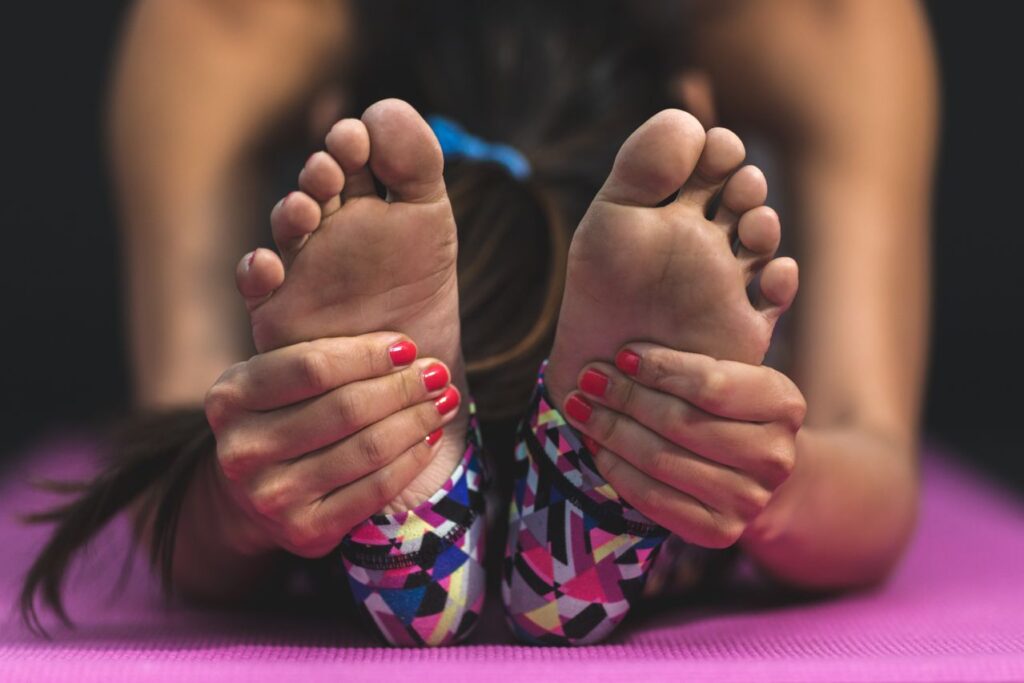
Balance and coordination depend on more than your ability to control your body from the hips upward. Your feet provide the foundation for many of the movements you perform every day. When you walk, stand, climb stairs, change direction, or move across an uneven surface, your feet must adapt to changes in pressure and position while helping your body stay stable.
If your feet do not move efficiently, the effects can extend beyond your feet. Overpronation, poor foot alignment, limited mobility, or differences between your two feet can influence how your knees, hips, and body respond during movement. In some cases, these changes may contribute to an unstable or less efficient gait.
This is where custom orthotics may have a role. When foot mechanics contribute to instability or an inefficient gait, an appropriately designed orthotic may help modify foot motion, redistribute pressure, or provide a more consistent base of support. Research suggests that foot orthoses may improve certain measures of balance in some people, although results vary and evidence does not show that orthotics directly improve overall coordination for everyone.
Orthotics are devices designed to fit inside your shoes and provide support or alter how pressure is distributed beneath your feet. When they are prescribed based on an appropriate assessment, custom orthotics may help improve foot mechanics and create a more stable base for movement. However, they are not a guaranteed solution for every balance or coordination concern.
Understanding how your feet move is an important first step.
A gait analysis can assess how your feet and lower limbs work together while you walk. A more detailed evaluation may also examine foot posture, pressure distribution, range of motion, alignment, and other factors that can affect movement. In some practices, 3D foot mapping may be used to capture the shape and dimensions of your feet when evaluating potential orthotic needs.
Key Takeaways
- Your feet provide an important foundation for balance, gait, and controlled movement.
- Overpronation or other changes in foot mechanics may affect how your lower limbs respond during walking and standing.
- Custom orthotics may help support foot alignment, redistribute pressure, and improve the mechanics of certain movements.
- Orthotics for balance work best when they are selected based on your individual foot structure, movement patterns, and goals.
- A gait assessment can help determine whether foot mechanics may be contributing to your balance or mobility concerns.
- Custom orthotics should be considered as part of a broader treatment approach rather than a replacement for appropriate exercise, rehabilitation, or medical care.
How Your Feet Affect Balance and Coordination
Your feet perform a complex job every time you move. They must provide enough stability to support your body while also allowing enough flexibility to adapt to the surface beneath you.
Your Feet Help Create a Stable Base
When you stand, your feet support your body weight and respond to changes in pressure. When you walk, they alternate between accepting your weight and helping you move forward.
This process requires your feet to adjust throughout each step. Your heel contacts the ground, your foot accepts your body weight, and your foot then helps generate the next phase of movement. Your nervous system constantly receives information from your feet and other parts of your body to help you maintain your position.
If foot mechanics are inefficient, your body may need to make adjustments to maintain stability.
That does not necessarily mean a particular foot position is abnormal or harmful. Human movement naturally varies from person to person. However, when a movement pattern is associated with symptoms, instability, excessive strain, or difficulty performing activities, it may be worth having your gait and foot mechanics assessed.
Overpronation Can Change Your Movement Pattern
Pronation is a normal part of walking. Your foot naturally rolls inward to help absorb forces and adapt to the ground.
The concern arises when excessive or poorly controlled pronation is associated with altered mechanics or symptoms. This is often referred to as overpronation.
When your foot rolls inward more than expected during a particular movement, it can change the position and movement of the rest of your lower limb. Your ankle, shin, knee, and hip may respond to these changes as your body attempts to maintain an efficient gait.
This does not mean that overpronation automatically causes pain or poor balance. Many people have pronation differences without significant problems. The important question is whether your individual movement pattern is contributing to the issue you are experiencing.
Coordination Depends on More Than Your Feet
Balance and coordination involve several systems working together. Your vision, inner ear, brain, muscles, joints, and nervous system all contribute to your ability to control movement.
Your feet also provide sensory information about the ground and your body’s position. Changes in foot pressure and contact with the ground provide information that your nervous system can use during movement.
For this reason, improving foot mechanics may be useful for some people, but it is only one part of the balance equation.
If your balance has changed suddenly or you are experiencing unexplained falls, dizziness, weakness, numbness, or significant difficulty walking, you should seek appropriate medical evaluation rather than assuming that orthotics are the answer.
How Custom Orthotics May Support Better Movement
Custom orthotics are designed around the characteristics of your feet rather than relying on a one-size-fits-all approach. Their purpose can vary depending on your needs, symptoms, activity level, and movement pattern.
When you are researching orthotics for balance, the most important question is not simply whether an orthotic provides more support, but whether your individual foot mechanics indicate that support may be useful.
Orthotics Can Help Manage Foot Alignment
One potential role of an orthotic is to influence how your foot contacts and moves against the ground.
Depending on its design, an orthotic may provide support in specific areas of the foot or influence the distribution of pressure. This may be particularly useful when your assessment shows a mechanical issue that could benefit from additional support.
For someone whose overpronation is associated with symptoms or inefficient movement, an appropriately designed orthotic may help influence foot motion and redistribute forces through the foot. Having pronation alone does not necessarily mean that you need orthotics.
The goal is not necessarily to force your foot into a rigid position. Good orthotic care should focus on supporting the movement pattern that makes sense for your individual needs.
Orthotics May Redistribute Pressure
Uneven pressure beneath your feet can affect how comfortable and stable you feel when standing and walking.
A custom orthotic can be designed to accommodate the shape of your foot and influence how pressure is distributed inside your shoe. In some cases, this may help reduce excessive loading in specific areas and create a more consistent contact surface.
Pressure management can be particularly relevant if you spend many hours standing, walk frequently, participate in sports, or experience recurring discomfort associated with your footwear.
However, an orthotic should not simply be designed around pressure measurements alone. Your symptoms, movement pattern, footwear, activity level, and overall lower-limb mechanics also matter.
Orthotics May Improve the Efficiency of Your Gait
Gait refers to the way you walk. It involves a coordinated sequence of movements involving your feet, ankles, knees, hips, pelvis, and trunk.
If your foot mechanics are affecting your gait, addressing those mechanics may help modify your walking pattern or improve comfort for some activities. Whether an orthotic produces a meaningful improvement depends on your individual mechanics, symptoms, and the reason for using the device.
This is one reason gait analysis can be useful before prescribing custom orthotics. Instead of looking only at the shape of your foot while you are standing, an assessment can consider what happens when you are actually moving.
For example, your feet may appear well aligned when you are standing still but behave differently while walking. Your clinician may also identify differences between your right and left sides that are difficult to notice on your own.
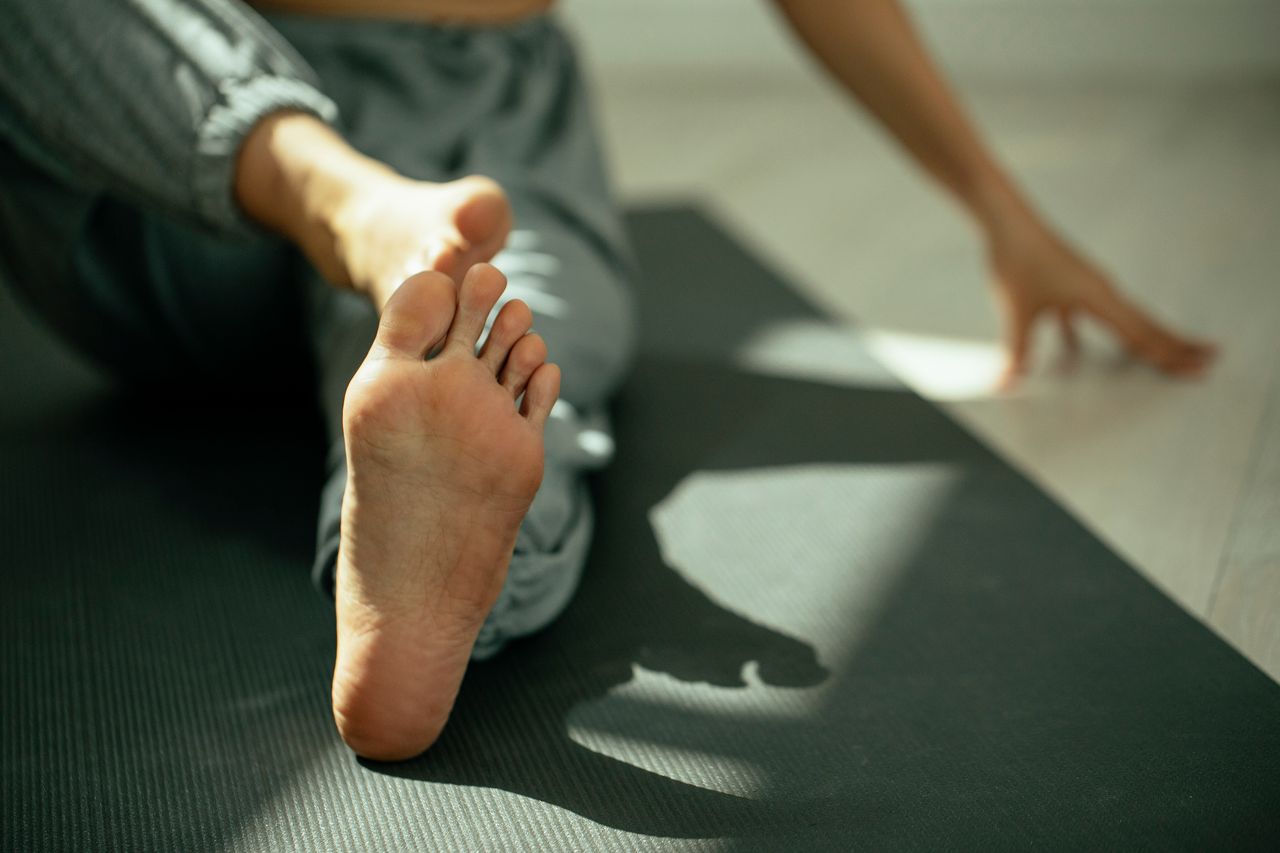
What a Gait Assessment Can Tell You
If you are considering orthotics for balance, a gait assessment can provide useful information about how your feet function during movement.
Your Walking Pattern Provides Important Clues
A gait assessment may examine how your feet contact the ground, how your weight moves from one foot to the other, and how your lower limbs respond throughout the walking cycle.
Depending on the evaluation, your clinician may observe:
- Foot position during standing and walking
- Pronation and supination patterns
- Heel and forefoot movement
- Step length and symmetry
- Lower-limb alignment
- Range of motion
- Weight distribution
- Shoe wear patterns
- Compensatory movement patterns
These observations can help determine whether your foot mechanics may be contributing to your symptoms or movement limitations.
3D Foot Mapping Can Add Individualized Information
Some orthotic practices use 3D foot mapping to capture detailed information about the shape and dimensions of your feet.
This type of technology can document the contours and dimensions of your feet and may support the customization process. It can be useful when an orthotic needs to accommodate differences in foot shape, but the scan is only one part of an overall orthotic evaluation.
However, a scan or digital image should not be viewed as a complete diagnosis by itself.
Your foot shape is only one part of your movement profile. A comprehensive assessment should consider how your feet function, not just how they look.
Your Assessment Should Consider Your Goals
An effective orthotic evaluation should be connected to what you actually want to accomplish.
You may want to walk more comfortably, feel steadier while standing, reduce recurring foot strain, improve your gait, return to an activity, or address mechanics associated with overpronation.
Your activity level also matters.
An orthotic designed for someone who spends most of the day standing may have different considerations from one intended for a runner, recreational athlete, or person who frequently walks on uneven terrain.
Your footwear matters, too. An orthotic must work within the shoes you actually use.
When Orthotics for Balance May Be Worth Considering
Custom orthotics are not necessary for everyone. They may be worth considering when an assessment identifies a foot or lower-limb mechanical factor that could reasonably benefit from additional support.
You Notice Repeated Foot or Lower-Limb Strain
If you repeatedly experience discomfort in your feet, ankles, knees, or other areas of the lower limb during walking or standing, your foot mechanics may deserve attention.
This does not mean your feet are necessarily the cause of the problem. Pain can have many sources.
An evaluation can help determine whether changes in foot mechanics are relevant to what you are experiencing and whether orthotic support is appropriate.
You Feel Unsteady During Certain Activities
You may notice that you feel less stable when walking for long periods, changing direction, standing for extended periods, or moving across uneven surfaces.
If your feet are struggling to provide an efficient base of support, addressing their mechanics may be one component of improving your overall movement strategy.
Still, balance concerns should be evaluated broadly. Orthotics may be useful when foot mechanics are part of the picture, but they will not correct every cause of instability.
Your Gait Shows Significant Mechanical Differences
You may benefit from an orthotic evaluation if a gait assessment identifies a meaningful difference in how your feet or lower limbs move.
For example, you may have noticeable asymmetry, excessive motion, or a recurring pattern that places greater demands on certain areas of your feet. These findings do not automatically mean that you need orthotics; they help provide context for deciding whether additional support may be appropriate.
In these situations, a custom orthotic may be considered as one tool for modifying the mechanical environment around your feet.
The purpose should be clear: support a specific movement or pressure-management goal rather than simply prescribing an orthotic because your feet look different from someone else’s.
What Custom Orthotics Cannot Do On Their Own
It is important to have realistic expectations. Orthotics can support certain aspects of foot and lower-limb mechanics, but they are not a universal treatment for balance or coordination problems.
Orthotics Do Not Replace Balance Training
If your balance is limited because of reduced strength, impaired coordination, vestibular problems, neurological conditions, or another underlying issue, an orthotic alone may not address the primary cause.
Balance exercises may be an important part of improving your ability to control your body.
Depending on your needs, your treatment plan may include strengthening, mobility exercises, coordination drills, balance training, or other rehabilitation strategies. Orthotics can sometimes complement these approaches when foot mechanics are also involved.
Evidence on orthotics and balance is still developing. Some studies have reported improvements in specific measures of postural stability or balance, but findings are not consistent across all populations or types of orthoses. Evidence that orthotics directly improve overall coordination is more limited. For that reason, orthotics are best viewed as one possible component of a broader approach when foot mechanics are relevant to your concerns.
Orthotics Do Not Guarantee Better Coordination
Coordination involves your brain, nervous system, muscles, joints, vision, and sensory systems. An orthotic cannot directly retrain all of these systems.
Instead, an orthotic may influence the mechanical conditions under which your body moves.
That distinction matters.
If your foot mechanics are contributing to a less efficient movement pattern, appropriately selected orthotic support may help modify the mechanical conditions under which you move. But better coordination usually requires more than changing what is inside your shoes.
More Support Is Not Always Better
It can be tempting to assume that the most supportive orthotic will provide the best result. That is not necessarily true.
Your feet need both stability and the ability to move and adapt. An orthotic that is unnecessarily rigid, poorly fitted, or inappropriate for your movement pattern may be uncomfortable and may not provide the intended benefit.
The objective is appropriate support, not maximum support.
A custom orthotic should be selected and designed according to your individual assessment, symptoms, movement pattern, footwear, and functional goals rather than the assumption that every foot requires the same type or amount of support.
How to Get the Most From a Custom Orthotic Evaluation
If you are considering custom orthotics for balance, gait correction, or overpronation, preparation can help make your evaluation more useful.
Bring the Shoes You Actually Wear
Your everyday shoes can provide valuable information.
Bring the footwear you use most often, particularly if your symptoms occur while wearing specific shoes. The fit, structure, heel height, and available space inside the shoe can all influence how an orthotic functions.
Your shoe wear pattern may also provide clues about how you load your feet during movement.
Explain When You Notice the Problem
Be specific about what you experience.
Instead of simply saying that you have poor balance, explain when it happens. Do you feel unstable while walking? Does it happen after standing for several hours? Do you notice it when walking quickly or changing direction?
Also explain whether the problem affects one side or both sides.
These details can help your clinician understand the relationship between your symptoms and your movement pattern.
Follow the Recommended Break-In Process
If you receive custom orthotics, you may need time to become accustomed to them.
Your clinician may recommend gradually increasing how long you wear them rather than using them for an entire day immediately. Follow the specific instructions you receive.
Pay attention to how your feet and legs respond.
Some adjustment may be expected when you begin using a new device, but significant pain, persistent discomfort, numbness, or other concerning symptoms should not be ignored. Contact your provider if something does not feel right.
Conclusion
So, can custom orthotics improve balance and coordination?
They may help improve certain aspects of balance or movement when foot mechanics are contributing to your difficulties, but evidence that orthotics directly improve overall coordination is limited. Their potential benefit depends on your individual foot mechanics, symptoms, activity needs, and the reason an orthotic is being considered.
Orthotics for balance may provide additional support, influence pressure distribution, and help address certain gait mechanics. For people with overpronation or other foot alignment concerns, appropriately designed orthotics may be one part of a broader strategy for improving comfortable and efficient movement.
The key is personalization.
Rather than choosing an orthotic based only on your shoe size or the appearance of your feet, a proper evaluation can look at how your feet function during standing and movement. Gait analysis, foot assessment, and, when appropriate, 3D foot mapping can help provide a more complete picture of your individual mechanics.
If you are experiencing recurring foot or lower-limb discomfort, changes in your walking pattern, or concerns about stability, consider having your gait and foot mechanics evaluated. A professional assessment can help determine whether custom orthotics are appropriate for you and what other strategies may support your movement goals.
Your feet are the foundation of every step. Understanding how they work can be an important part of understanding how you move.
Frequently Asked Questions
1. Can custom orthotics help with balance?
Custom orthotics may help balance when foot mechanics are contributing to instability or inefficient movement. They can provide support and influence how pressure is distributed beneath your feet. However, balance has many contributing factors, so orthotics may be only one part of an appropriate treatment plan.
2. Are orthotics good for overpronation?
Orthotics may help manage overpronation in some people by influencing foot mechanics and pressure distribution. However, pronation is a normal part of walking, and not everyone with increased pronation needs orthotics. An assessment can help determine whether your particular movement pattern would benefit from additional support.
3. Can orthotics improve the way you walk?
They may improve certain aspects of gait when foot mechanics are contributing to an inefficient or uncomfortable walking pattern. The potential benefit depends on your individual foot structure, movement pattern, symptoms, footwear, and the design of the orthotic.
4. How do I know if I need custom orthotics?
You may want an evaluation if you have recurring foot discomfort, certain gait abnormalities, overpronation associated with symptoms, uneven pressure, or movement concerns that may involve your feet. A professional assessment can determine whether custom orthotics are appropriate rather than assuming that everyone needs them.
5. What is gait analysis?
Gait analysis is an assessment of how you walk and how different parts of your body work together during movement. Depending on the approach, it may examine foot position, pronation, symmetry, lower-limb alignment, range of motion, pressure distribution, and other movement characteristics.
6. Is 3D foot mapping the same as gait analysis?
No. 3D foot mapping primarily captures information about the shape and dimensions of your feet, while gait analysis evaluates how you move. The two may be used together during an orthotic evaluation, but they provide different types of information.
7. How long does it take to adjust to custom orthotics?
Adjustment varies from person to person. You may be advised to begin wearing your orthotics for shorter periods and gradually increase use as recommended by your provider. If you experience significant or persistent discomfort, contact the professional who fitted your orthotics rather than continuing to wear them without guidance.