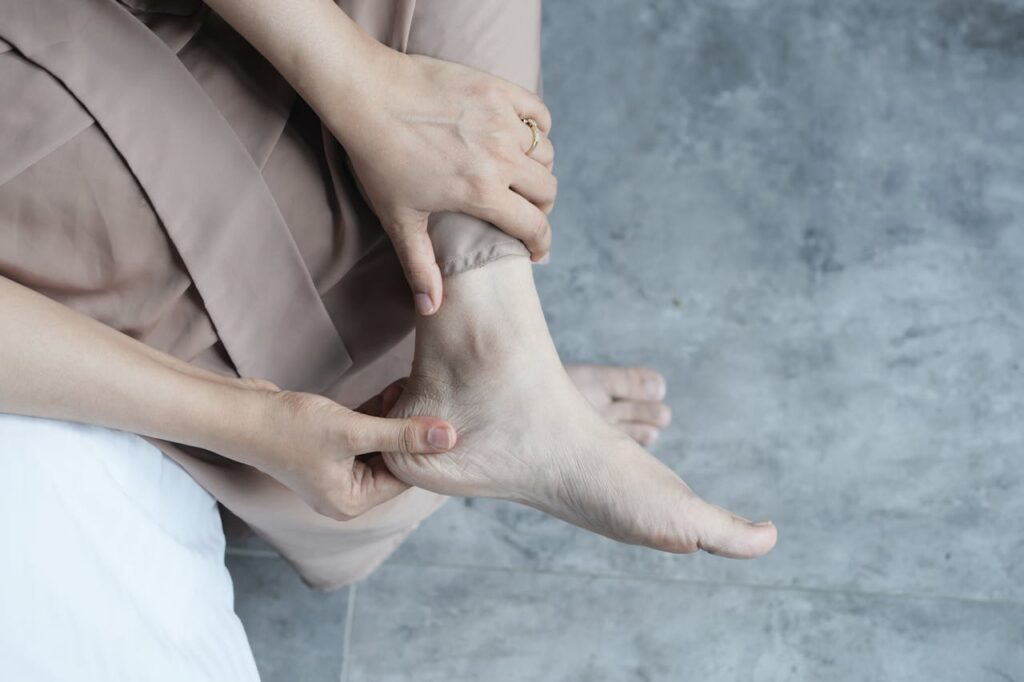
Plantar fasciitis is one of the most common causes of heel pain. It often produces a sharp or stabbing sensation near the bottom of the heel, especially during the first few steps after getting out of bed. Pain may temporarily improve as the foot warms up, only to return after prolonged standing, walking, running, or getting up after sitting for an extended period.
The plantar fascia is a strong band of connective tissue that runs along the bottom of the foot. It connects the heel bone to the toes and helps support the foot’s arch. It also plays an important role in absorbing forces and stabilizing the foot during standing, walking, and running. When the tissue is repeatedly overloaded, it can become irritated and develop small areas of damage.
Because the plantar fascia helps support the arch, arch support is commonly recommended as part of a conservative plantar fasciitis treatment plan. An arch support may be built into a shoe, added as a removable store-bought insole, or incorporated into a custom orthotic prescribed by a qualified healthcare professional.
Arch support does not simply cushion the painful heel. A properly selected support can help distribute pressure across a wider area of the foot, reduce excessive strain on the plantar fascia, improve foot stability, and make standing or walking more comfortable. However, arch support is usually most effective when combined with other measures, such as appropriate footwear, stretching, activity modification, and progressive strengthening.
The right support also varies from person to person. A device that feels comfortable and helpful for one individual may feel too firm, too high, or poorly positioned for another. Foot shape, walking mechanics, occupation, activity level, footwear, and the severity of symptoms can all affect the choice.
This guide explains how arch support may help treat plantar fasciitis, the differences among common types of support, how to choose and use an insert, and why arch support should normally be viewed as one part of a broader recovery plan.
Key Takeaways
- Arch support can reduce stress on the plantar fascia by supporting the foot and distributing pressure more evenly.
- A well-fitted support may improve comfort during standing, walking, work, and exercise, but it does not instantly repair irritated tissue.
- Both low and high arches can be associated with plantar fascia strain, although the mechanical reasons may differ.
- More support is not always better. An arch that is too high, rigid, or poorly positioned can cause discomfort.
- Store-bought inserts may work well for many people, while custom orthotics may be appropriate when symptoms persist or foot mechanics are more complex.
- Supportive shoes are important because even a suitable insert may not work properly inside an unstable, worn-out, or poorly fitting shoe.
- Arch support is usually most effective when combined with plantar fascia and calf stretching, strengthening, activity modification, and gradual return to activity.
- Persistent, severe, unusual, or worsening heel pain should be professionally evaluated because not every case of heel pain is plantar fasciitis.
What Is Arch Support?
Arch support refers to a shaped structure that sits beneath the arch of the foot. It may be part of the shoe itself or provided by a removable insert or orthotic device.
The support is designed to create contact between the foot and the shoe in areas that might otherwise receive little support. Instead of allowing most of the load to concentrate under the heel and forefoot, a properly fitted device can help spread some of that pressure across the midfoot.
Arch supports are available in many shapes, heights, materials, and levels of firmness. Some are soft and flexible, while others are relatively firm. Certain products support only the heel and arch, while full-length insoles extend beneath the entire foot.
Arch Support Versus Heel Cushioning
Arch support and heel cushioning are related but different.
Heel cushioning is intended primarily to soften impact and reduce pressure beneath the heel. Arch support is intended to influence how the foot is supported and how forces are distributed across the foot.
Many plantar fasciitis inserts combine both features. They may include a contoured arch, a deep heel cup, and cushioning beneath the heel. This combination can be helpful because plantar fasciitis may involve both tissue strain and sensitivity to pressure.
Extremely soft cushioning without enough structure may feel comfortable initially but compress under body weight. On the other hand, an excessively hard arch can create a painful pressure point. The goal is an appropriate balance between comfort and functional support.
How Does Arch Support Help Plantar Fasciitis?
Arch support may help plantar fasciitis in several connected ways. Its purpose is not to immobilize the foot or eliminate all movement. Instead, it can modify the forces passing through the foot so that the irritated plantar fascia is not required to handle as much repetitive strain.
It Helps Distribute Pressure More Evenly
When a person stands or walks, pressure is not always distributed evenly across the bottom of the foot. Depending on foot structure and movement patterns, a large portion of the load may be concentrated beneath the heel and forefoot.
A contoured arch support creates additional contact beneath the midfoot. This may spread pressure over a broader surface rather than allowing it to remain concentrated in a few sensitive areas.
Both store-bought and custom arch supports may help distribute pressure more evenly across the feet. Supportive shoes with appropriate arch support and cushioning may also form part of a conservative care plan.
Pressure redistribution does not mean that the heel carries no weight. Instead, the heel, midfoot, and forefoot may share the load in a more balanced way.
It May Reduce Tension on the Plantar Fascia
As the arch lowers or changes shape under load, the distance between the heel and forefoot can increase. This can place additional tension on the plantar fascia.
Arch support may limit excessive deformation of the arch during weight-bearing. By reducing how far the arch drops or lengthens, the support may reduce repeated pulling on the fascia near its attachment to the heel.
The effect is similar to giving a strained structural element additional support. The plantar fascia continues to work, but it may not have to absorb the same degree of stress with every step.
This does not mean that everyone with plantar fasciitis has a visibly “collapsed” arch. People with high arches may also develop the condition because a relatively rigid foot can distribute impact poorly. Arch support can therefore be useful for different foot types, but the ideal contour and cushioning will vary.
It Can Improve Heel Stability
Many arch-support devices include a shaped or deep heel cup. A heel cup surrounds the sides and back of the heel, helping hold it in a more stable position inside the shoe.
Improved heel stability may reduce unnecessary side-to-side motion and help the foot interact more consistently with the support. A deep heel cup may also help preserve the position of the natural cushioning tissue under the heel.
This feature can be especially helpful when the shoe itself has a firm heel counter. If the back of the shoe collapses easily, the insert may not be able to provide the same level of control.
It May Reduce Excessive Foot Motion
Pronation is a normal movement in which the foot rolls inward and the arch lowers to help absorb force. It is necessary for normal walking and should not automatically be treated as a problem.
However, the amount, timing, or speed of pronation may contribute to symptoms in some people. If the foot remains excessively flexible or unstable during the stance phase, the plantar fascia may experience repeated tension.
A suitable arch support may help moderate this movement. The goal is not to force the foot into a rigid position but to provide enough guidance and stability to reduce irritating motion.
Foot mechanics are complex, so it is unwise to choose an aggressive corrective device solely because a shoe store or online test labels a person an “overpronator.” Comfort, symptoms, footwear, movement, and clinical findings all matter.
It Can Make Standing and Walking More Comfortable
Pain often changes the way a person moves. Someone with plantar fasciitis may shorten their stride, walk on the outside of the foot, avoid placing the heel down normally, or shift more weight to the other leg.
These compensations can create discomfort elsewhere, including the opposite foot, ankle, knee, hip, or lower back.
If arch support makes normal weight-bearing more comfortable, it may help the person walk with a more natural pattern. This can make daily activity more manageable while the plantar fascia recovers.
The support does not need to eliminate every sensation immediately to be useful. A meaningful reduction in morning pain, walking discomfort, or soreness after work may indicate that it is helping.
It May Improve Tolerance for Rehabilitation
Stretching and strengthening are important parts of many plantar fasciitis treatment plans, but exercises can be difficult when ordinary standing and walking remain highly painful.
An arch support may lower symptoms enough to help a person participate more consistently in rehabilitation. For example, improved daytime comfort may make it easier to perform calf raises, foot-strengthening exercises, or gradual walking.
The device is therefore not necessarily a substitute for rehabilitation. It can serve as a tool that helps make rehabilitation more tolerable.
It May Reduce Repeated Irritation During Daily Activities
The plantar fascia is loaded thousands of times during an active day. Even a small reduction in strain per step may become meaningful when accumulated across hours of standing or walking.
This is particularly relevant for people who work on hard surfaces, walk long distances, or cannot avoid being on their feet. Arch support cannot remove every occupational demand, but it may reduce the repeated irritation associated with those demands.
Does Arch Support Cure Plantar Fasciitis?
Arch support can help manage plantar fasciitis, but calling it a cure would be misleading. The condition usually develops through a combination of factors rather than one isolated problem.
A person may have tight calf muscles, reduced ankle mobility, inadequate foot strength, a sudden training increase, unsuitable shoes, prolonged standing demands, or insufficient recovery. An insert may reduce mechanical stress, but it does not automatically resolve all of these contributors.
Most people improve with conservative treatment, although recovery can take time. Mayo Clinic notes that many people recover within several months using nonsurgical care such as stretching, icing, and avoiding aggravating activities. Arch supports are among the therapies that may be included. Mayo Clinic
Arch support should therefore be understood as one part of a treatment strategy. It creates a more supportive environment for the foot, while other measures address mobility, strength, activity exposure, and healing.
Who May Benefit From Arch Support?
Arch support may be useful for many people with plantar fasciitis, but the amount and type of support required can differ.
People With Low or Flexible Arches
A flexible arch may lower substantially when the foot bears weight. This movement can increase tension through the plantar fascia in some individuals.
A contoured insert may reduce excessive arch deformation and create a more stable base. However, the support should not feel as if it is forcing the foot upward or creating a sharp pressure point.
People With High or Rigid Arches
High arches are sometimes assumed to need no support, but a rigid foot may have difficulty distributing impact. Pressure may become concentrated under the heel and forefoot.
People with high arches may benefit from an insert that matches the arch shape while providing adequate cushioning. A device that is excessively rigid could be uncomfortable, so material selection is important.
People Who Stand for Long Periods
Workers who spend much of the day standing or walking on concrete, tile, or other hard surfaces may repeatedly load the plantar fascia.
Supportive footwear and arch support may reduce fatigue and improve pressure distribution. Inserts should be evaluated together with the work shoe, because a narrow or unstable shoe can limit their effectiveness.
Runners and Active Individuals
Running exposes the plantar fascia to repeated loads. A rapid increase in mileage, speed, hills, or training frequency can exceed the tissue’s current capacity.
An insert may improve comfort during the recovery period, but training errors should also be addressed. Continuing the same aggravating workload simply because an insert reduces pain may delay recovery.
People Whose Shoes Lack Adequate Support
Flat, flexible, worn-out, or poorly fitted shoes may provide little structural support. Adding an insert can sometimes improve the situation, but an insert cannot fully correct a shoe that is unstable, too narrow, or badly worn.
In some cases, replacing the shoe is more useful than adding a new insole to an unsuitable pair.
Types of Arch Support for Plantar Fasciitis
Supportive Shoes
A supportive shoe forms the foundation beneath an insert. Helpful characteristics may include:
- A stable sole that does not twist excessively
- Adequate cushioning
- A firm heel counter
- Enough room for the toes
- A removable liner if an orthotic will be used
- An appropriate fit through the heel and midfoot
- A moderate degree of flexibility near the forefoot
A shoe does not need to be extremely heavy or rigid. It should provide a stable platform without interfering with comfortable movement.
Store-Bought Insoles
Over-the-counter insoles are widely available and relatively affordable. They come in multiple arch heights, lengths, and firmness levels.
A quality prefabricated insert may be enough for many people, particularly when the foot has no major deformity and symptoms are relatively recent. Higher price does not automatically mean better performance.
The best store-bought option is usually one that fits the shoe, matches the arch reasonably well, and improves comfort without creating new symptoms.
Custom Orthotics
Custom orthotics are made using a professional assessment and a model or scan of the feet. The prescription may be modified according to foot structure, symptoms, joint mobility, activity, and footwear.
Custom devices may be considered when:
- Symptoms persist despite an appropriate conservative program
- Store-bought inserts repeatedly cause discomfort
- There is a significant difference between the feet
- Foot structure or gait mechanics are complex
- Other foot or ankle conditions are present
- The person has special occupational or athletic requirements
- A healthcare professional identifies a need for a more specific design
Custom orthotics are not automatically necessary for every case. They are also not guaranteed to outperform a comfortable prefabricated device for all patients. Their value is greatest when individual modifications are clinically justified.
Heel Cups and Heel Pads
Heel cups and pads focus primarily on cushioning or stabilizing the heel. They may help reduce direct heel pressure, but they provide less arch control than a full or three-quarter-length support.
They may be useful when tenderness beneath the heel is a major complaint, but they should not be confused with a comprehensive arch-support device.
Taping
Athletic or therapeutic tape can provide temporary arch support. Taping may be used to determine whether mechanical support reduces symptoms before a person purchases an insert.
Because tape can loosen and irritate the skin, it is usually a short-term strategy. A physical therapist, podiatrist, or other qualified professional can demonstrate an appropriate technique.
How to Choose the Right Arch Support
Start With Comfort
An arch support should feel noticeable but not painful. Mild awareness of the insert may be normal during the adjustment period, but sharp pressure, burning, numbness, or increasing pain suggests a problem.
Immediate comfort is not the only measure of effectiveness, but it is important. A device that consistently hurts is unlikely to be worn long enough to help.
Match the Support to the Foot
The highest point of the insert should fit beneath the natural arch rather than pressing too far forward or backward. If the support feels like a hard lump beneath the foot, the contour may be wrong.
Arch height labels are not standardized across brands. A “medium” arch from one manufacturer may resemble a “high” arch from another. Trying the insert inside the intended shoe is more useful than relying solely on its label.
Consider Firmness
A very soft insert may compress and provide little support. A very rigid insert may create excessive pressure. Many people do well with a semi-rigid device that supports the arch while retaining some cushioning.
Body weight, activity level, foot sensitivity, and the shoe’s cushioning can affect the most comfortable firmness.
Check the Heel Cup
The heel should sit securely in the cup without being forced upward or squeezed. A deep heel cup may improve stability, but it must fit within the shoe.
If the insert raises the heel too much, the foot may slip out of the back of the shoe. A shoe with greater internal depth may be needed.
Make Sure the Shoe Has Enough Space
Adding an insole changes the amount of space inside the shoe. When possible, remove the original liner before inserting a full-length support. Placing a thick orthotic on top of the existing liner may crowd the toes and create heel slippage.
After inserting the support, check that the toes can move freely and that the upper does not press tightly on the foot.
Evaluate Both Immediate and Delayed Symptoms
Pay attention to how the feet feel while wearing the support and later in the day. An insert may feel comfortable for a few minutes but produce arch soreness after several hours.
Useful questions include:
- Is morning pain becoming less intense?
- Can you stand or walk longer with less discomfort?
- Is heel pain less severe at the end of the day?
- Has any new arch, ankle, knee, hip, or back discomfort appeared?
- Do symptoms return quickly when the support is removed?
- Can you wear the device consistently?
Tracking these changes for one or two weeks can provide more useful information than judging the insert after a single short trial.
How to Begin Wearing Arch Supports
Even a well-designed support may require an adjustment period. Wearing it for an entire workday immediately can cause temporary arch or muscle soreness.
A gradual schedule may look like this:
- Wear the support for one or two hours on the first day.
- Add an hour or two each day if it remains comfortable.
- Use it initially during low-demand daily activities.
- Delay long walks, running, or strenuous exercise until ordinary wear feels comfortable.
- Reduce wear time and seek advice if symptoms worsen.
This schedule is only a general example. Some people adapt faster, while others need more time.
The insert should not cause blisters, numbness, persistent redness, or sharp pain. People with diabetes, poor circulation, neuropathy, or fragile skin should obtain professional guidance because they may not feel damaging pressure normally.
Why Footwear Still Matters
An arch support relies on the shoe around it. If the shoe bends, twists, or collapses excessively, the insert may shift or fail to provide consistent support.
Worn-out midsoles can also reduce cushioning and stability. The outside of a shoe may look acceptable even when the internal materials have compressed.
Footwear selection should consider the activity. A shoe that works well for casual walking may not provide the stability, traction, or fit required for running or long work shifts.
Walking barefoot on hard surfaces may aggravate symptoms for some people because the plantar fascia receives no external support. Supportive indoor footwear can sometimes reduce discomfort, particularly during the first steps in the morning.
However, footwear choices should be individualized. The long-term goal is not necessarily to make the foot permanently dependent on rigid support. It is to manage symptoms while addressing the factors contributing to tissue overload.
Combining Arch Support With Other Treatments
Plantar Fascia Stretching
Specific stretching of the plantar fascia may help reduce morning pain and improve tissue flexibility.
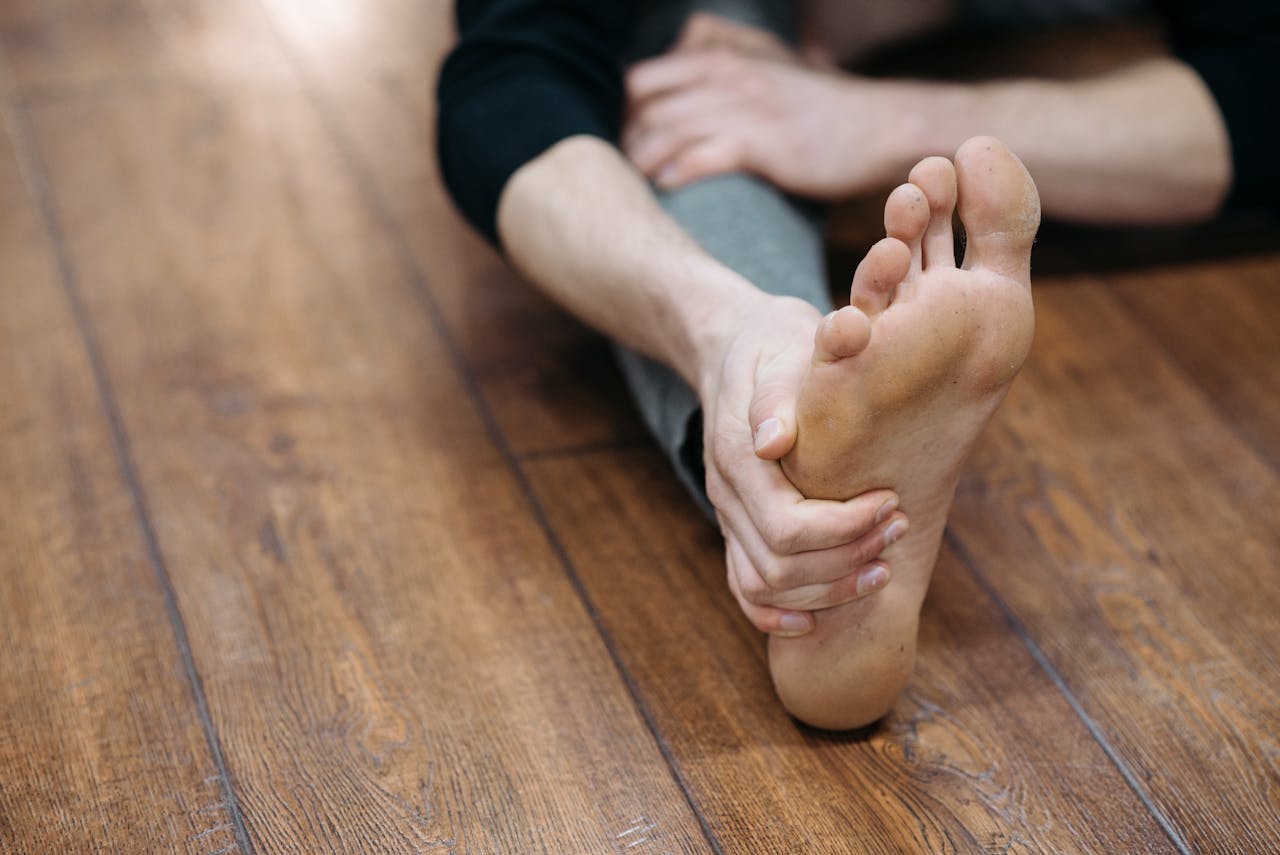
One common technique involves crossing the affected leg over the opposite knee, holding the toes, and gently pulling them back until a stretch is felt through the arch. The stretch should be controlled rather than forceful.
This can be particularly useful before taking the first steps in the morning or after prolonged sitting.
Calf and Achilles Stretching
Limited ankle dorsiflexion or calf tightness may increase stress on the plantar fascia. Calf stretching can target both the gastrocnemius and soleus muscles.
A straight-knee wall stretch emphasizes one portion of the calf, while a slightly bent-knee version targets deeper tissue. The heel should remain on the ground, and the foot should point generally forward.
Stretching should create tension but not sharp pain.
Progressive Strengthening
The foot and lower leg need enough strength to tolerate daily loads. Exercises may include controlled calf raises, toe-strengthening movements, balance exercises, and resistance work.
Strengthening should progress gradually. If an exercise causes a significant symptom flare that lasts into the next day, the volume or intensity may be too high.
Activity Modification
Complete inactivity is rarely necessary, but temporarily reducing aggravating activities may help. A runner might reduce mileage, avoid hills, or replace some running sessions with cycling or swimming.
Someone who stands at work may benefit from scheduled sitting breaks, cushioned flooring, or rotating tasks when possible.
The goal is to keep overall loading within the plantar fascia’s current capacity and then rebuild that capacity gradually.
Ice and Symptom Management
Ice may provide short-term relief after activity. A wrapped cold pack can be applied to the heel, or a cold bottle can be gently rolled beneath the foot.
Ice should not be applied directly to the skin, and people with impaired sensation or circulation should seek professional advice before using cold therapy.
Pain relief may make recovery more comfortable, but it should not be used to mask symptoms while continuing clearly aggravating activity.
Night Splints
A night splint holds the ankle and toes in a gently stretched position during sleep. This may reduce the sudden tension that occurs when taking the first steps in the morning.
Some people find night splints helpful, while others struggle with comfort or sleep disruption. Proper fit is important.
Physical Therapy
A physical therapist can assess ankle mobility, calf flexibility, foot strength, walking mechanics, training habits, and other contributing factors. Treatment may include stretching, strengthening, taping, movement education, and a graded return-to-activity plan.
Arch support may be incorporated into this plan when external support is likely to help.
Common Mistakes When Using Arch Support
Choosing the Highest Arch Available
A higher arch is not automatically more supportive or effective. If the insert presses aggressively into the foot, it may cause bruising, irritation, or altered walking.
The contour should match and support the arch rather than force it into a predetermined shape.
Expecting Immediate Healing
An insert may reduce pain quickly, but the tissue still needs time to recover and adapt. Feeling better during a walk does not necessarily mean the plantar fascia is ready for unrestricted activity.
Activity should increase gradually, even if the support provides substantial relief.
Using the Same Insert in Every Shoe
An insert that works in one pair may not fit another. Dress shoes, work boots, athletic shoes, and casual shoes differ in width, depth, heel height, and sole shape.
Some people need more than one type of device for different footwear.
Ignoring Worn-Out Shoes or Inserts
Shoes and insoles lose structure with use. Compressed cushioning, uneven wear, cracking, or a distorted shape may indicate that replacement is needed.
There is no universal replacement schedule because durability depends on material, body weight, activity level, and frequency of use.
Continuing an Aggravating Activity Unchanged
Support may reduce strain, but it cannot always overcome excessive training or occupational load. If symptoms repeatedly worsen after the same activity, the activity plan should be adjusted.
Treating Every Heel Pain as Plantar Fasciitis
Arch support may not help pain caused by a stress fracture, nerve entrapment, inflammatory arthritis, infection, or another condition. Using inserts for months without confirming the diagnosis can delay appropriate treatment.
How Long Does Arch Support Take to Help?
Some people notice improved comfort within the first few days. Others need several weeks to determine whether the device is useful.
The timeline depends on:
- How long symptoms have been present
- The severity of the condition
- Daily standing and walking demands
- Whether the device fits correctly
- Footwear quality
- Consistency with stretching and strengthening
- General health and tissue-healing capacity
- Whether aggravating activities have been modified
Improvement is not always linear. A person may have several good days followed by a temporary flare after an unusually active day.
Look for overall trends rather than expecting pain to disappear immediately. Reduced first-step pain, increased walking tolerance, fewer severe flare-ups, and improved end-of-day comfort can all indicate progress.
Conclusion
Arch support can help treat plantar fasciitis by distributing pressure more evenly, supporting the midfoot, stabilizing the heel, and reducing some of the repetitive tension placed on the plantar fascia. It may make standing and walking more comfortable while the tissue recovers and can improve a person’s ability to participate in stretching and strengthening exercises.
However, arch support is not a universal or instant cure. The most effective device is not necessarily the most expensive, firmest, or highest. It is one that fits the individual’s foot and footwear, feels comfortable, and helps reduce symptoms without creating new problems.
Store-bought inserts may provide enough support for many people. Custom orthotics may be useful when symptoms persist, the feet differ significantly, or more complex mechanics and medical concerns require individual assessment. In either case, the device should usually be combined with supportive footwear, appropriate activity changes, stretching, progressive strengthening, and sufficient recovery time.
Most importantly, heel pain should not simply be ignored or pushed through. If symptoms are persistent, severe, or inconsistent with typical plantar fasciitis, a qualified healthcare professional can confirm the diagnosis and develop a treatment plan based on the individual’s needs.
Frequently Asked Questions
Does arch support really help plantar fasciitis?
Yes, arch support may help reduce plantar fasciitis symptoms. A properly fitted support can distribute pressure more evenly across the foot, reduce excessive arch deformation, and decrease some of the repetitive tension placed on the plantar fascia. It usually works best as part of a broader treatment plan.
What type of arch support is best for plantar fasciitis?
There is no single best arch support for everyone. The appropriate choice depends on arch shape, foot mobility, symptoms, activity, footwear, and comfort. Many people benefit from a semi-rigid insert with a contoured arch, stable heel cup, and adequate cushioning.
Are hard or soft arch supports better?
Soft supports may provide cushioning but can compress under load. Firm supports may offer greater structure but can feel uncomfortable if the contour is wrong. Many people prefer a semi-rigid design that combines functional support with cushioning.
Can too much arch support make plantar fasciitis worse?
Yes. An arch that is too high, too rigid, or incorrectly positioned can create pressure and change walking mechanics. Stop using an insert and seek professional advice if it causes sharp pain, numbness, blisters, or steadily worsening symptoms.
Are custom orthotics necessary for plantar fasciitis?
Not always. Many people improve with a suitable store-bought insert and supportive footwear. Custom orthotics may be considered when symptoms persist, prefabricated products do not fit, or a professional identifies complex foot mechanics or additional medical needs.
How long should I wear arch supports each day?
Begin gradually if the support is new. You might start with one or two hours and increase wear time as comfort allows. Once adjusted, many people wear them during activities that involve substantial standing or walking. Individual recommendations may differ.
Should I wear arch support in both shoes?
Usually, yes. Wearing support on only one side may create a height difference or alter walking mechanics. However, the exact prescription may differ when there are structural differences between the feet, so follow professional guidance when available.
Can I put arch supports on top of my existing insoles?
It is usually better to remove the original removable liner before inserting a full-length orthotic. Stacking inserts can crowd the foot, squeeze the toes, and cause heel slippage. If the original liner is not removable, choose a thinner device or a shoe with more internal space.
Should I walk barefoot if I have plantar fasciitis?
Barefoot walking on hard surfaces can aggravate symptoms in some people. Supportive indoor footwear may be more comfortable, especially during the first steps after getting out of bed. Individual tolerance varies, so use symptom response as a guide.
Can arch support eliminate morning heel pain?
It may reduce morning pain by limiting strain during daytime activity, but it does not support the foot while you sleep. Plantar fascia stretching before standing and, when recommended, a night splint may also help address first-step pain.
Can I continue running while using arch supports?
That depends on symptom severity and how the foot responds. Arch support should not be used to hide pain while maintaining an aggravating training load. Reducing mileage or intensity and returning gradually may be necessary. Seek professional advice if pain changes your gait or worsens during or after running.